We are looking for a Senior Software Engineer (C++, Qt)
October 16, 2026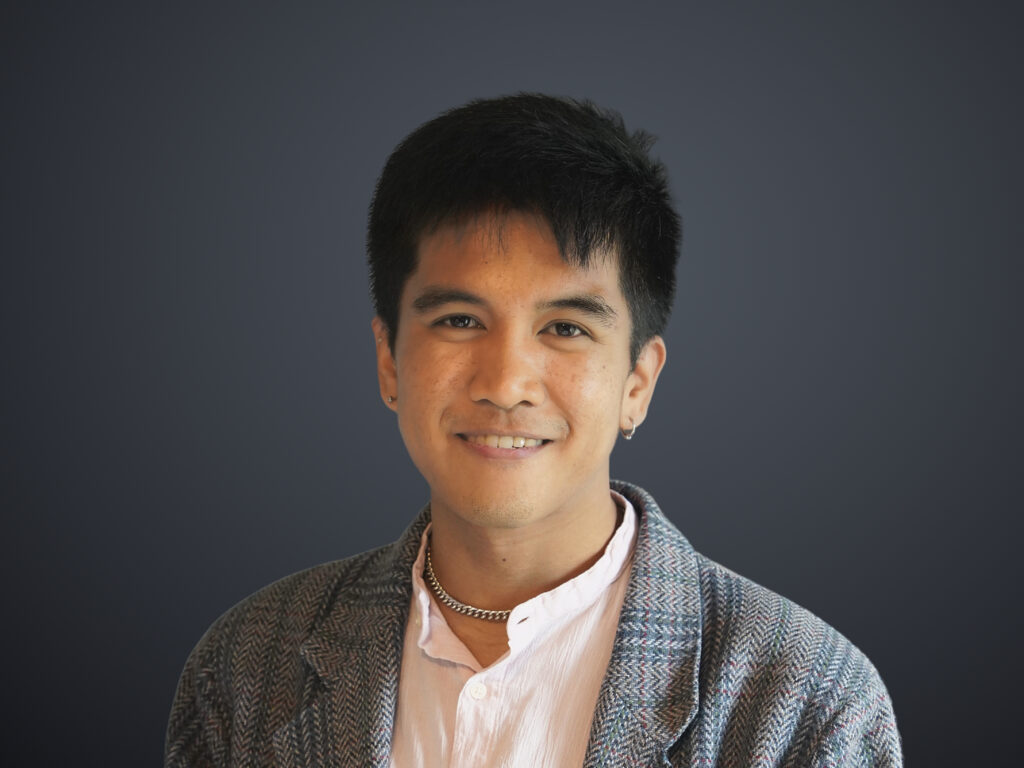
Angelo Robiños is Sensmet’s Application Sales Engineer. A little over 100 days into the job, we asked him to look back.
When I joined, I told the team that what drew me to this role was the gap between a good measurement and a customer trusting it enough to act on it. A hundred days in, most of my work has been in that gap.
An instrument worth going deep on
As a chemist I’ve worked with a lot of instruments, from chromatographs and ICP-OES to potentiostats and even knock engines for octane rating. Most I learned well enough to get good data and move on. Sensmet µDOES®pulled me in much further. Every measurement is an electric spark fired inside the liquid sample itself, flash-heating a microscopic volume to around 10,000 °C so the metals in it emit light at their own wavelengths. Getting a reliable number out of that means understanding the sample chemistry, the plasma physics, the spectrometer optics, the discharge electronics and the spectral data processing all at once.
My first project put all of that to the test: measuring a trace metal at parts-per-billion (µg/L) levels in a stream full of sodium and calcium, which interfere with the signal. I spent my first weeks in our application lab in Espoo with Johanna, our laboratory manager, testing measurement settings and watching how the spectra changed. By the end we had removed most of the interference through settings alone, with no extra sample treatment. It’s a delight to work on an instrument with this much to explore, and I keep finding new things to look into.
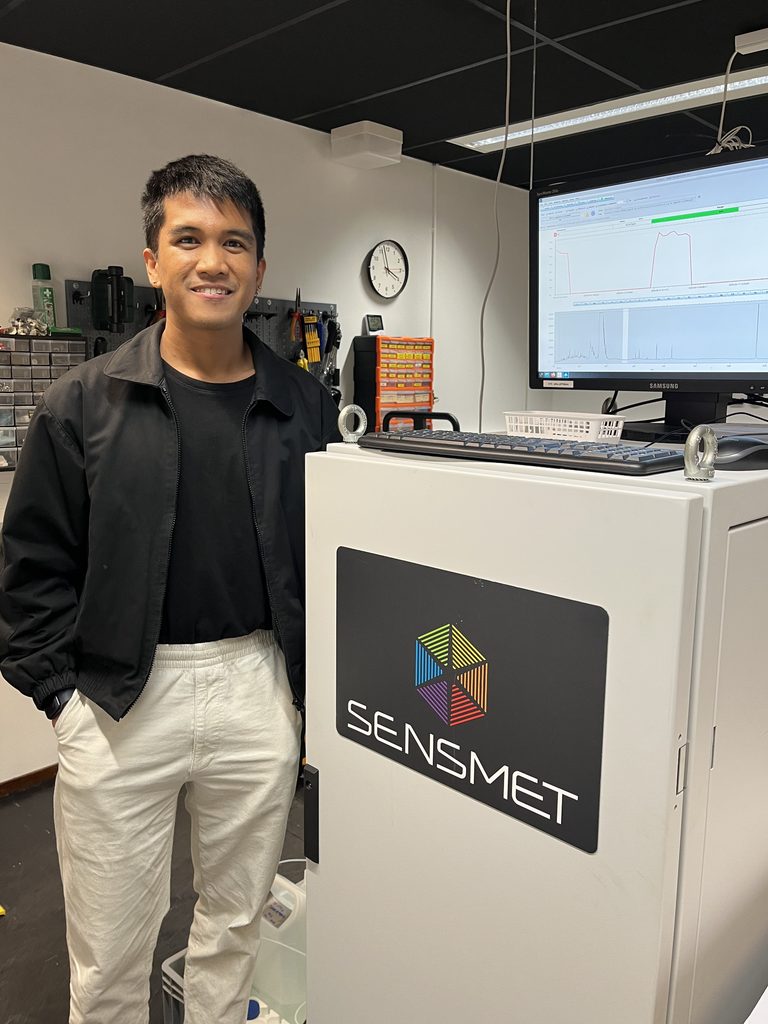
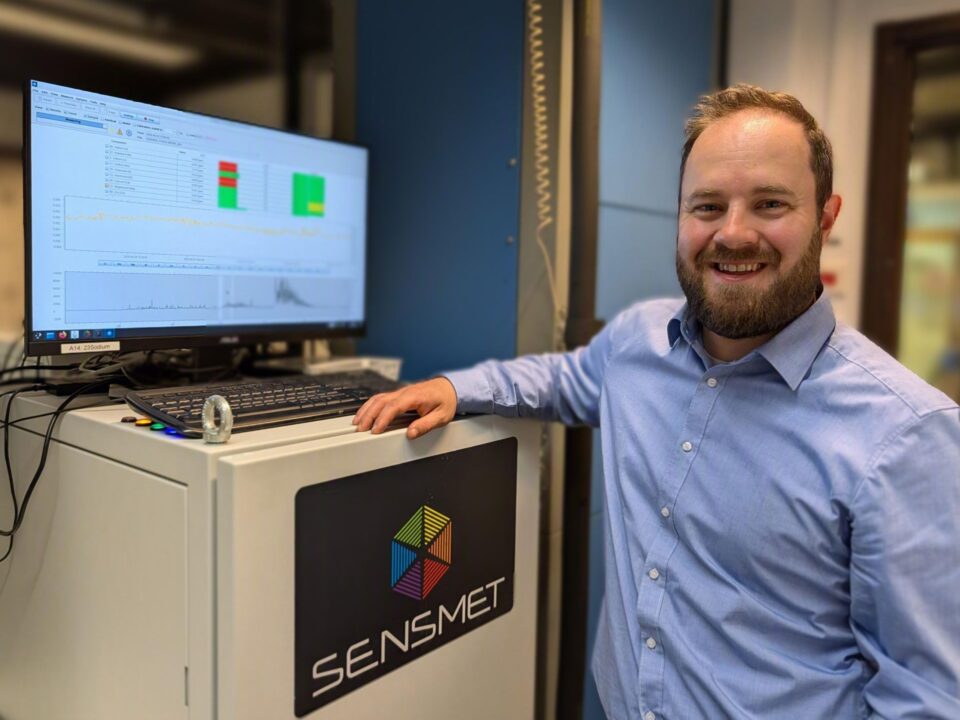
Angelo with a µDOES analyser in the Espoo application lab
A crash course in µDOES
Much of my induction came straight from the people who built the technology. Toni, our CEO and co-founder, walked me through the company, and Aappo, our Chief Sales Officer, showed me how our calibration models turn spectra into concentrations and how our sales process works. Later, our co-founders Kalle and Ari took me deep into the plasma and the instrumentation around it: how the plasma actually forms, and what affects it. Within days of the first sessions I had turned my notes into a pitch deck, and I was presenting it on my first customer calls soon after.
From the lab to customer calls
Since then I’ve spoken with companies in battery recycling, rare earths, chemical production and carbon capture, and with university research labs. Almost every call comes back to one question: will the analyser work on our process liquid? Answering it honestly means understanding the customer’s process in detail and being upfront about where µDOES reaches its limits.
Learning by writing
A good way to learn a product is to write about it, so I’ve turned a lot of what I picked up into material for customers and colleagues: a new brochure for our online Dilution Unit, a basic software user guide for operators at a customer site, a commissioning record template for site demonstrations, and a few sales decks. Each one meant asking the team in Espoo and Oulu a lot of questions.
Getting more out of calibration data
Calibration is where my analytical chemistry background feels most at home. Every factory calibration run produces a lot of data, and I wanted to see how much more we could learn from it. So, I built my own analysis tool that looks at each run, element by element, and documents how each of them performs. On my first visit to our headquarters in Oulu I went through it with Kalle, who had ideas in the same direction, and we’re now looking at how to bring them together.
Pitching in Turin
Last week I went to Turin for the EIT RawMaterials Expert Forums on rare earths and magnets and on battery materials, as Sensmet’s representative. I pitched Sensmet in the session on startups transforming the battery value chain, to an expert audience from industry and research. Most of the real work happened in the conversations afterwards. Across the two forums I made new contacts in battery recycling, hydrometallurgy and rare earths, and I’m following up with them now.
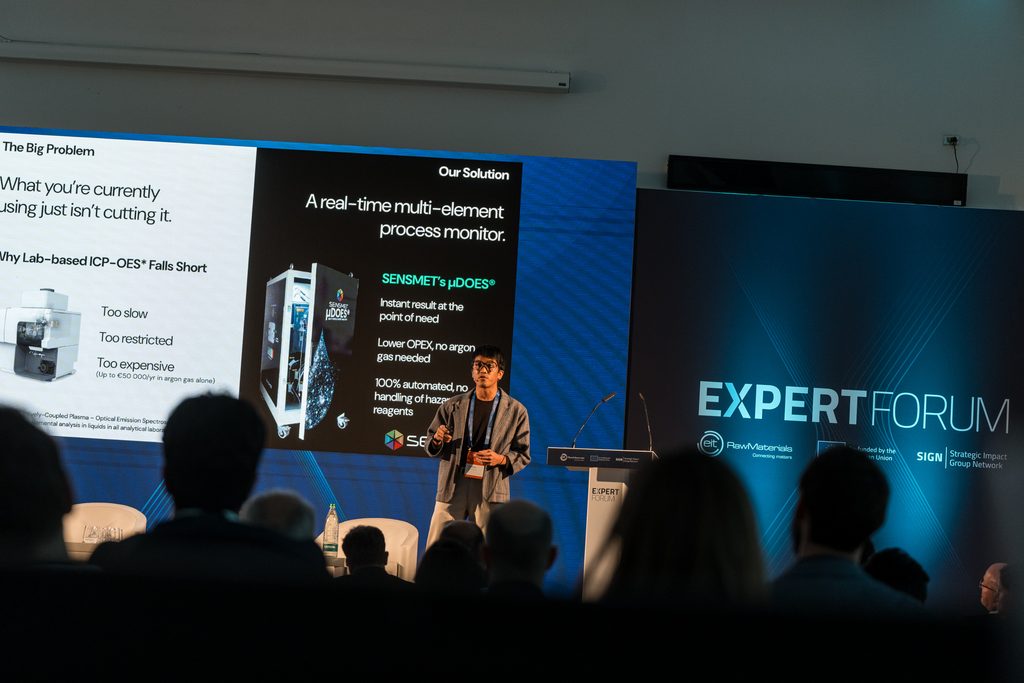
Angelo pitching at the Battery Materials Expert Forum in Turin, Italy (from the EIT RawMaterials photo set)
A small team, and what’s next
Sensmet is small enough that the whole team meets every Monday morning for a quick round of updates, and again for coffee or tea on a random afternoon. A good idea is never more than a coffee break away from the people who can act on it.
Right now, I’m combining analytical chemistry and AI for the next-generation product we’re working on, and my goals along the way are taking µDOES to a customer site for a demonstration and, of course, closing a sale.
If you work with process liquids and wonder whether µDOES could measure yours, I’d like to hear about it. Book a demo or find me on LinkedIn.