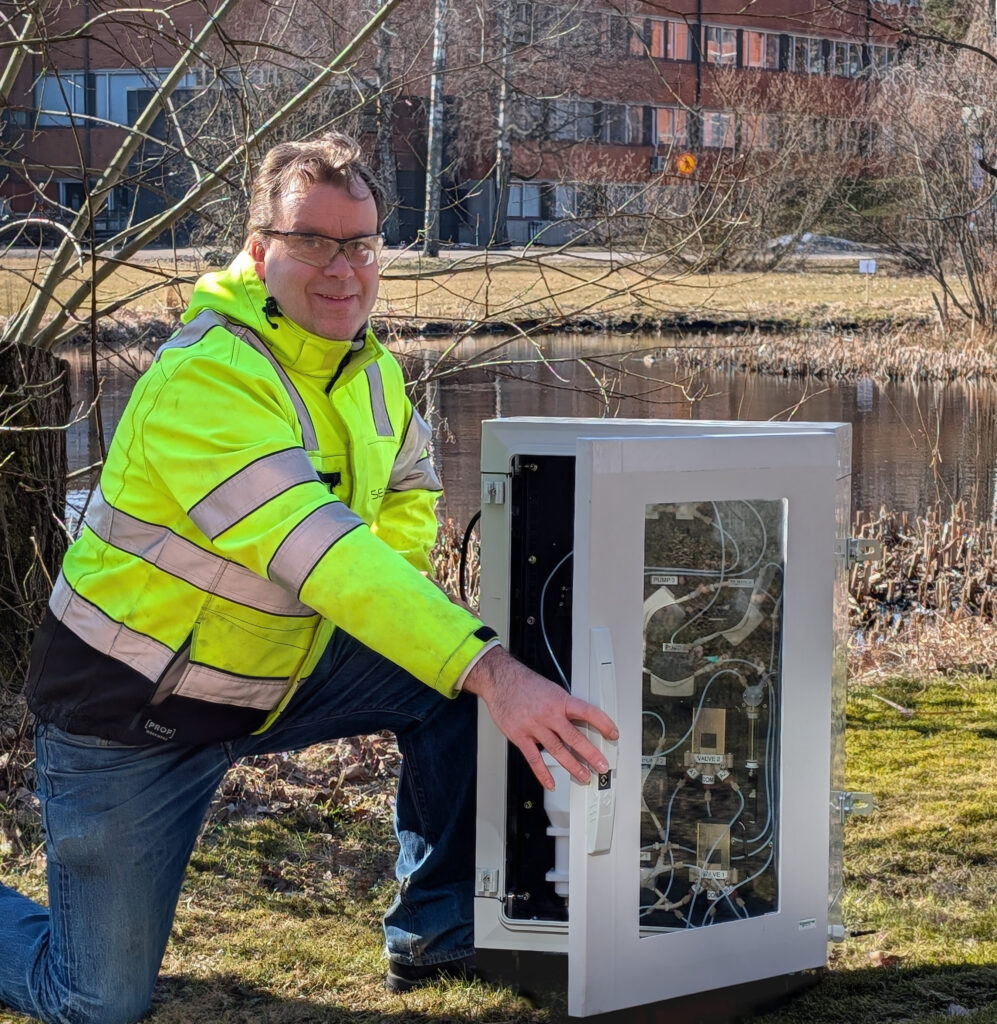
Sensmet secures €1.5m investment from raw materials fund
March 30, 2026
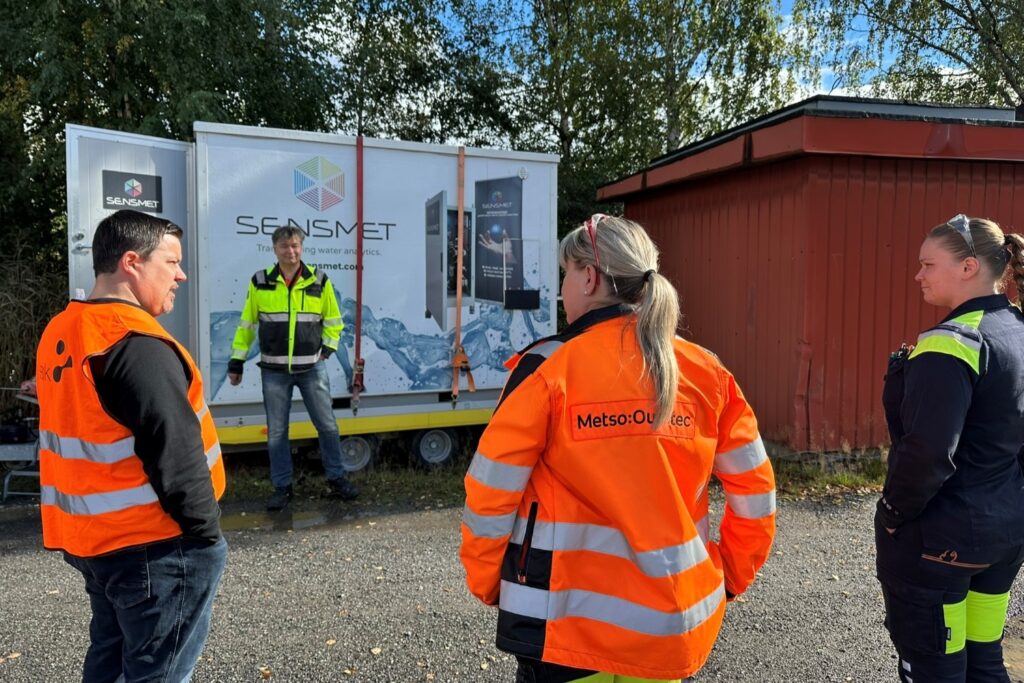
Bart Rooijakkers joins Sensmet as new Operations Manager
June 24, 2026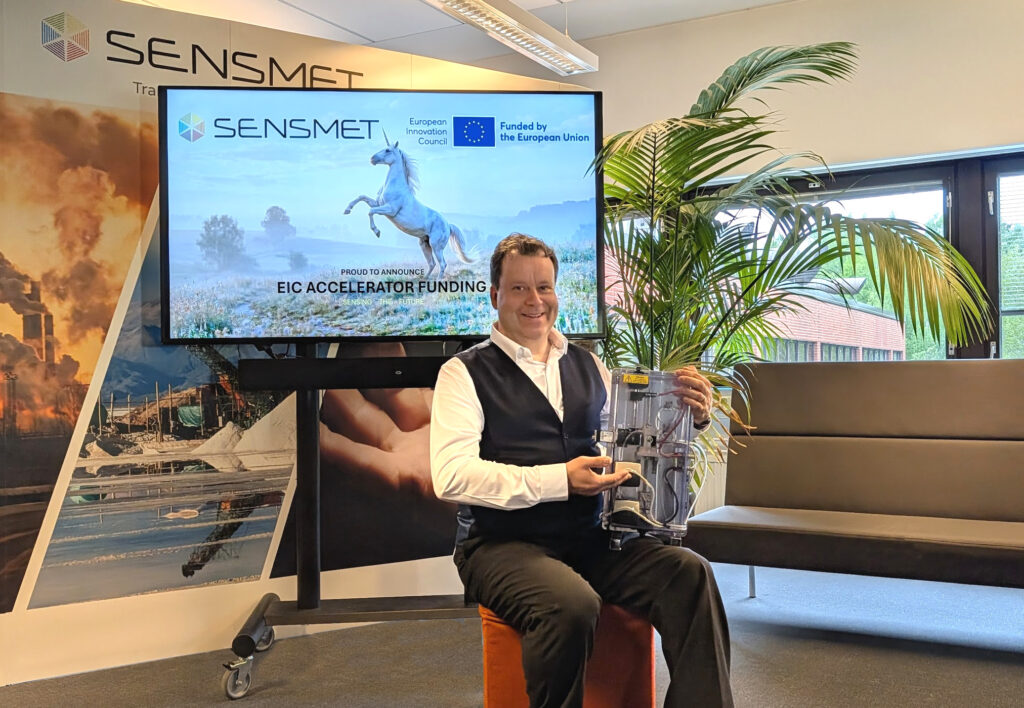
Sensmet, the Finnish developer of a unique water quality monitoring technology, has been awarded a €2.5m grant in the latest round of the EIC Accelerator. The EIC award is recognised as a mark of excellence, and builds on a recently announced additional investment of €1.5m.
Key points:
- Strategic impact: Continuous monitoring of lithium, cobalt, and nickel enables more efficient production/recycling of critical materials.
- Sensmet project objective: Improve versatility of the µDOES® technology.
- Investment landscape: This €2.5m award builds on €1.5m additional investment from EIT RawMaterials.
The European Innovation Council (EIC) is the European Union’s flagship innovation programme designed to identify, develop, and scale up breakthrough technologies and game-changing innovations. Established under the EU Horizon Europe programme with a budget of over €10 billion (2021–2027), EIC supports researchers and startups that enhance green and digital transition. Sensmet’s technology directly aligns with the objectives of the EU’s Critical Raw Materials Act, and has received funding from the EIC under grant agreement No. 101298437. Sensmet signed the EIC grant Agreement on 29th May 2026.
Founded in 2017, Sensmet has developed and commercialized technology for the continuous, real-time multi-metal analysis of aqueous samples. Employing patented Micro-Discharge Optical Emission Spectroscopy (µDOES®), Sensmet products are particularly well suited for strategic materials production and recycling, including battery metals and rare earth elements (REEs). They are also ideal for high-value, ultra-sensitive applications such as monitoring residual palladium after catalytic processes.
Commenting on the award, Sensmet CEO Dr Toni Laurila said: “The EIC Accelerator is one of the most competitive deep-tech SME funding instruments in Europe, so this award represents powerful third-party validation of both our technology and our commercial roadmap. More specifically, this award will primarily be used to advance µDOES, further improving its capability to enable customers to perform high-precision measurements directly at the point of value creation, where real-time chemical intelligence has the highest impact.”
Sensmet Board Member Duane Sword adds: “The need for precise trace metals analysis in solutions spans many markets and applications from environmental to pharmaceutical and energy. Over recent years we have seen an evolution of chemical measurement technologies, such as Raman, FTIR, NIR, and Mass Spectrometry, that started in the laboratory, and have been adapted for process analysis. Many of these have been miniaturised towards field-deployable, portable solutions to perform analysis at the point of need, for fast decision making. Sensmet is leading the effort to bring optical emission spectrometry out of the lab and into the process, and beyond.
“Sensmet’s Micro-Discharge Optical Emission Spectroscopy, µDOES®, enables the multi-metal real-time analysis of aqueous samples. The technology can be utilised to monitor elements such as lithium, nickel, sodium, cobalt, manganese, nickel, copper, and more.
The patented µDOES® technology is based on atomic emission spectroscopy. A micro-discharge (electric spark) is created directly inside the aqueous sample, causing a microscopic volume of the fluid surrounding the spark to be flash-heated to 10 000 °C. Molecules in the micro-discharge are dissociated into atoms, which are excited to their respective higher electronic states. Upon returning to their ground state, these atoms release their excess energy by emitting light at their characteristic wavelengths. The µDOES® measures this atomic emission spectrum to derive quantitative analysis of the sample, displaying measurements locally, and transferring data to the user’s process management systems.
Explaining the scale-up potential of µDOES technology, Dr Laurila said: “There are two clear factors underpinning the enormous potential that this represents. First, continuous multi-metal analysis offers substantial process, financial and environmental benefits in critical processes. Metals such as lithium, cobalt and nickel for example, are essential for batteries, renewable energy systems, and advanced manufacturing.
“Second, the traditional approach to metal measurements in liquid processes has involved sampling for laboratory analysis, which incurs delays and causes inefficiency. Continuous measurements with µDOES completely resolves these issues.”
With global concern about the availability of critical materials, Sensmet’s technology will become a vital enabler of efficient processes to produce and recycle the materials that are essential for the digital economy. “This funding marks our transition from a technology innovator to a long-term industrial partner,” says Aappo Roos Chief Sales Officer. “For us, it’s no longer just about selling a sophisticated analyzer; it’s about solving our customers’ daily operational headaches. To support this goal, we are building our global sales and service network to provide world-leading industries with reliable, real-time elemental data every single day.”
Sensmet Contact:
Aappo Roos, M.Sc.
Chief Sales Officer
Sensmet Oy
Headquarters: Moreenitie 15 L 6
90620 Oulu, Finland
Tel. +358 50 3738 610
Aappo.roos@sensmet.com
About Sensmet:
Sensmet’s breakthrough technology, Micro-Discharge Optical Emission Spectroscopy µDOES®, enables the online multi-metal analysis of aqueous samples. Critically important applications include the continuous monitoring of lithium and other battery metals during production processes and battery metal recycling. In addition, continuous metals monitoring offers substantial advantages in a range of industrial, mining and wastewater applications. By delivering laboratory-grade results in real-time, Sensmet helps improve process efficiency, increases metal recovery, ensures consistent product quality, and helps protect the environment.
About the European Innovation Council:
The EIC was established by the European Commission in 2021 following a 3 years successful pilot phase. It has a mission to identify, develop and scale up breakthrough technologies and disruptive innovation. It has a budget of over €10 billion for the period 2021-2027.
The funding and support is organised into three main funding schemes covering all technology readiness levels: EIC Pathfinder for advanced research to develop the scientific basis to underpin breakthrough technologies; EIC Transition to validate technologies and develop business plans for specific applications; and the EIC Accelerator to support companies (SMEs, start-ups, spin-outs and in exceptional cases small mid-caps) to bring their innovations to market and scale up. The Accelerator provides a combination of grant support and direct equity investments in companies through a dedicated EIC Fund, which also provides a platform for co-investments with other investors.
For all schemes, the direct financial support is augmented with access to a range of Business Acceleration Services.
The strategy and implementation of the EIC is overseen by the EIC Board of twenty individuals from the innovation ecosystem (academia, business, investment, ecosystem builders). The EIC also employs dedicated Programme Managers with high level expertise in their fields, to set the challenges and proactively manage portfolios of projects towards technological breakthroughs.